
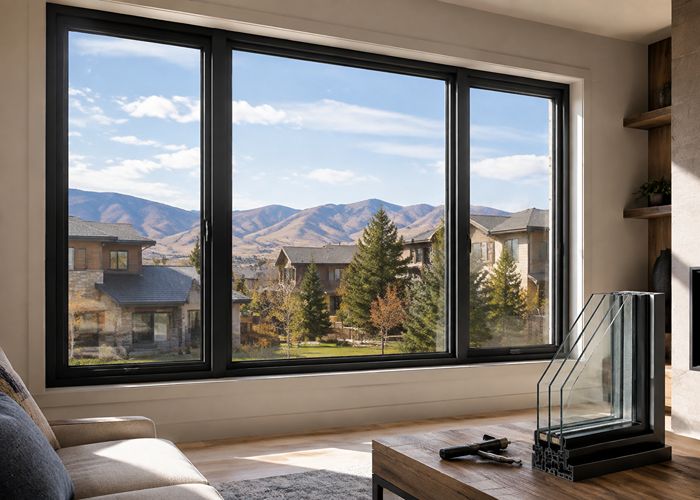
What is Low-E glass? It’s window glass treated with an ultra-thin coating that helps control radiant heat transfer while still allowing visible light into your home.
But Low-E is only one part of a window’s glass package. If you’re comparing replacement windows, you’ll probably also encounter U-factor, Solar Heat Gain Coefficient (SHGC), double-pane and triple-pane glass, gas fills, and other performance terms.
Each tells you something different about the window. Understanding them makes it easier to compare actual performance instead of choosing a window based on marketing terms alone.
Low-E stands for low emissivity. The coating applied to the glass is designed to reduce radiant heat transfer through a window.
Depending on the coating and overall glass package, Low-E glass can:
Low-E coatings are thin enough that the glass can still provide natural light and outdoor views. The coating manages certain types of energy rather than simply darkening or blocking the window.
Low-E is common in modern energy-efficient windows, but seeing “Low-E glass” on a product description doesn’t tell you everything about that window’s performance.
Radiant heat can move through ordinary window glass. A Low-E coating reflects a portion of that heat energy, reducing how readily it passes through the glass.
During colder weather, the coating can reduce radiant heat loss from the home’s interior. Certain Low-E configurations can also limit unwanted solar heat entering through the window during warmer conditions.
Placement matters, too.
In a double-pane insulated glass unit, there are four glass surfaces when counted from the exterior toward the interior. Low-E coatings are commonly placed on a protected surface facing the sealed space between the panes. The exact position depends on the glass package and its intended performance.
This also protects the coating from routine cleaning and contact.
Not every Low-E coating is made the same way.
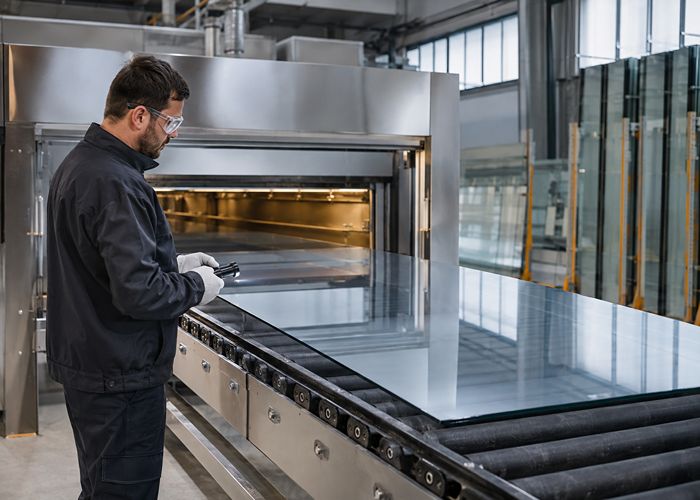
Hard-coat Low-E, sometimes called pyrolytic Low-E, is applied during glass manufacturing. The coating bonds to the glass surface and is relatively durable.
Soft-coat Low-E is applied after the glass has been manufactured using a different process. It can provide stronger control over radiant heat transfer, but because the coating is more sensitive to exposure, it is typically protected inside an insulated glass unit.
You don’t need to judge a replacement window based on “hard coat” or “soft coat” alone. The complete window ratings provide a much more useful comparison.
U-factor for windows measures how readily heat transfers through the window assembly. A lower number generally indicates better insulating performance.
For example, a window rated at a U-factor of 0.25 transfers heat less readily than a comparable window rated at 0.35.
The National Fenestration Rating Council (NFRC) uses whole-product U-factor ratings. That means the rating accounts for more than the center of the glass. The frame, glazing, spacer, and other components contribute to the result.
If you’re familiar with insulation R-values, remember that the numbers move in opposite directions:
This is why U-factor can tell you more about thermal performance than simply counting panes or looking for a Low-E label.

When comparing windows, Solar Heat Gain Coefficient (SHGC) tells you how much solar heat the window allows into the home.
The rating falls between 0 and 1. Lower numbers indicate less solar heat gain, while higher numbers indicate more.
For example, a window with an SHGC of 0.25 admits less solar heat than one rated at 0.40.
That doesn’t mean the lowest SHGC is automatically right for every home.
Climate, window orientation, shade, and direct sunlight all matter. Limiting solar heat can be particularly useful for windows exposed to intense sun or in warmer climates. In other situations, a different balance between solar heat control and natural light may make more sense.
Both ratings involve heat, but they measure different parts of window performance.
Think of U-factor as answering, “How well does this window resist heat transfer?”
SHGC answers, “How much solar heat gets through?”
ENERGY STAR also uses U-factor and SHGC together when determining which residential windows qualify in different parts of the country. The current ENERGY STAR Version 7.0 requirements have been in effect since October 23, 2023, with performance criteria that vary by climate zone. This is another reason to compare the two ratings together instead of assuming one number tells you everything about a window.

The double-pane vs. triple-pane windows comparison starts with the number of layers in the insulated glass unit.
Double-pane windows contain two panes of glass with one sealed space between them. Triple-pane windows use three panes and create two sealed spaces.
That additional pane and insulating space can improve thermal performance, but pane count isn’t a quality rating by itself.
Triple-pane windows can make sense when greater thermal performance is a priority, particularly in demanding climates. That doesn’t mean every home needs them.
A well-designed double-pane window with an appropriate Low-E coating, gas fill, frame, and spacer system can still provide strong performance.
Sound is another consideration, but pane count alone doesn’t determine how much noise a window blocks. Glass thickness, laminated glass, spacing between panes, frame construction, and the complete window design can all affect sound transmission.

The sealed spaces between panes can be filled with an insulating gas instead of ordinary air.
Argon is commonly used in insulated glass units because it conducts heat less readily than air and can improve thermal performance.
Krypton has stronger insulating properties and can be useful in narrower spaces, including certain high-performance glass configurations. It is generally more expensive than argon.
Neither gas changes the appearance of the window. It works alongside the panes, Low-E coating, spacer, and other components to reduce heat transfer through the insulated glass unit.

This is where all those technical terms become useful when you’re actually shopping for windows.
NFRC provides standardized performance ratings that make it easier to compare products on the same basis. Depending on the window and available ratings, an NFRC label may include:
Rather than comparing phrases such as “high-performance glass” or “advanced insulation,” look at standardized ratings when they’re available.
Two windows can both advertise Low-E glass and argon gas yet have different U-factors and SHGC ratings. Differences in the coating, glass spacing, spacer, frame, and other components can change the performance of the finished window.
If you are comparing ENERGY STAR certified windows, check that the NFRC ratings also meet the ENERGY STAR requirements for your climate zone. ENERGY STAR provides a climate-zone finder so you can see which performance criteria apply where you live.
NFRC also maintains a certified product directory where window performance ratings can be verified.

Low-E coating, gas fill, and pane count are useful specifications, but no single feature determines how a window performs.
The complete system can include:
Consider two windows that both advertise Low-E glass and argon gas. They may still perform differently because their coatings, glass spacing, spacers, frames, and other components aren’t identical.
That’s why complete product ratings are more useful than comparing windows based on one advertised feature.
Want to understand the rest of the window? Read our guide to energy-efficient windows and most efficient styles for a closer look at the frame, installation, weatherstripping, and other components.
You do not need to chase the lowest number on every window label. Start with what each rating tells you and how the window will be used in your home.
Then consider the conditions around the window. Climate, window orientation, direct sunlight, natural light, comfort, condensation concerns, noise, and budget can all influence which combination makes the most sense.
ENERGY STAR specifically recommends considering window orientation along with U-factor and SHGC. For example, SHGC can become especially important on east- and west-facing windows that receive stronger direct sun.
The goal is to compare the complete glass and window package, not choose a product because one specification sounds impressive.
Common Questions About Low-E Window Glass
Low-E coatings are extremely thin and aren't designed to block the view through the glass. Depending on the coating and lighting conditions, you may notice a subtle tint or reflectivity compared with untreated glass.
No. Low-E describes a coating, while double pane describes the construction of the insulated glass unit. A double-pane window can use Low-E glass, but the terms don't mean the same thing.
Triple-pane construction can improve thermal performance, but the number of panes isn't enough to judge a window by itself. Compare U-factor, SHGC, glass coatings, gas fills, frame construction, and the complete product rating.
Now that you know what Low-E glass, U-factor, SHGC, and pane count mean, you can use those specifications to make a more informed comparison between replacement windows.
Conservation Construction offers replacement windows with low-emissivity glass and features designed to improve thermal performance and limit air leakage. The company offers a range of window configurations, including single-hung, double-hung, casement, slider, awning, picture, bay, bow, garden, and specialty styles.
Instead of choosing a window because one feature sounds impressive, look at how the glass, frame, and complete window system work together.
Explore Conservation Construction’s replacement windows or contact the team to schedule a free consultation and compare window options for your home.
