If you've ever stood in a showroom or scrolled through window options online and thought, "What's actually the difference between these two?" you're not alone. Single-hung and double-hung windows look almost identical from the outside, but they function differently, cost differently, and suit different homes in different ways.
This guide breaks down everything you need to know so you can make a confident decision - whether you're replacing one window or upgrading your entire home.

A single hung window has two sashes - the framed panels that hold the glass - but only the bottom sash moves. You slide it upward to open the window, and the top sash stays fixed in place.
This is actually the more traditional window style. You've seen them in older homes, ranch-style houses, and plenty of classic American architecture. They're simple, reliable, and do the job well.
The fixed upper sash means less moving hardware, which translates to fewer parts that can wear out over time. For homeowners who want a no-fuss window that just works, single-hung windows make a lot of sense.

A double hung window looks nearly identical to a single hung window from the street. The difference is that both the top and bottom sashes move independently.
You can raise the bottom, lower the top, or do both at once. That flexibility gives you more control over airflow and ventilation inside your home. It also opens up easier cleaning options, which we'll get into shortly.
Double hung windows have become the more popular choice in modern home construction and replacement projects. They offer a bit more versatility, and many homeowners appreciate the added functionality for the relatively small price difference.
Before diving into the details, here's a quick look at how these two window types stack up across the most important categories:
| Feature | Single Hung | Double Hung
|
|---|---|---|
| Moving sashes | Bottom only | Top and bottom |
| Average cost | Lower | Slightly higher |
| Ventilation | Moderate | Better |
| Cleaning ease | Harder | Easier |
| Energy efficiency | Comparable | Comparable |
| Best for | Budget-conscious installs | Versatility and convenience |
Now let's dig into each of these areas so you understand the "why" behind every comparison.
This is one of the more practical differences between the two window types, and it matters more than people expect.
With a single hung window, you can only open the bottom sash. Air comes in from the bottom, but there's no top opening to let warm air escape upward. This isn't a dealbreaker, but it limits how effectively you can cross-ventilate a room.
Double hung windows let you open both sashes, which creates what's called a "stack effect."
Cooler air enters through the bottom while warmer air - which naturally rises - can exit through the top. On a mild Colorado day when you'd rather not run the AC, this kind of natural ventilation can make a real difference in comfort.
If you're upgrading windows in a bedroom, a kitchen, or any room where airflow matters, the double hung design gives you more to work with.
Let's be honest - nobody looks forward to cleaning windows. The type you choose can make that job significantly easier or harder.
With single hung windows, the upper sash doesn't tilt or move. That means cleaning the exterior of the upper sash usually requires going outside or working from a ladder. For first-floor windows, that's manageable. For second-floor or higher windows, it becomes a real inconvenience.
Most double-hung windows are designed with tilt-in sashes. Both the top and bottom sashes can tilt inward toward you, letting you clean the exterior glass from inside your home. No ladder is required, and you don't have to lean out the window.
For multi-story homes, this is a feature that genuinely improves quality of life. It also makes it easier to keep your windows in good shape long-term, which protects your investment.
Here's the part most homeowners want to know about: how much does each type actually cost?
Single-hung windows are generally less expensive than double-hung windows. The price gap isn't always dramatic, but it exists - and it adds up when you're replacing multiple windows at once.
The lower cost of single-hung windows comes down to fewer moving parts. There's one operating sash instead of two, which means less hardware, less complexity, and lower manufacturing costs that get passed along to the buyer.
Double hung windows cost more upfront, but many homeowners consider the added functionality - easier cleaning, better ventilation, more flexibility - worth the extra investment.
When you factor in long-term convenience and resale appeal, the price difference often looks smaller than it seems at first glance.
The best way to understand what your specific project will cost is to get a professional estimate based on your window count, size, and the product you choose. At Conservation Construction, free estimates are available so you can plan your project with real numbers before committing to anything.

This is a question that comes up often, and the honest answer is: window type matters less than window quality when it comes to energy efficiency.
Both single-hung and double-hung windows can be highly energy efficient if they're built with the right materials and installed correctly. Factors like the frame material, glass package, low-E coatings, gas fills between panes, and weatherstripping all have a far bigger impact on energy performance than whether the window is single or double-hung.
That said, double hung windows have more moving parts and more seams where air can potentially infiltrate. A well-made single hung window may have a slight edge in airtightness simply because the fixed upper sash creates fewer gaps. But with quality products and professional window installation, both options can perform extremely well.
For homeowners in Colorado, where temperatures swing dramatically between seasons and altitude affects how homes manage heat and cold, choosing an energy-efficient window product matters more than choosing a single vs double hung configuration. Working with a company that understands the local climate - and installs windows designed for it - is what makes the real difference.
If energy performance is a top priority for your replacement project, explore energy-efficient windows built for Colorado's unique conditions.
Not every window choice fits every home equally well. Here's a practical look at which style tends to work better in different situations.
Single hung windows are a natural match for older homes with traditional architectural details.
They maintain a classic look, and their simpler operation aligns well with the design language of craftsman bungalows, colonial-style homes, and ranch houses.
If your home already has single hung windows and you're replacing like-for-like, sticking with single hung can be both cost-effective and aesthetically consistent.
Double hung windows tend to be a better fit for newer construction and multi-story homes. The tilt-in cleaning feature is especially valuable when windows are on upper floors, and the improved ventilation flexibility suits open floor plans and contemporary living styles.
If you're doing a full-home window replacement and want a product that's easy to maintain and versatile in use, double hung windows are worth the upgrade.
Kitchens, bathrooms, and bedrooms benefit most from double-hung windows. These are spaces where controlling airflow - and being able to open a window from the top to release heat or moisture - can improve both comfort and air quality.
For utility rooms, basements, or spaces where the window rarely gets opened, a single hung option may be perfectly sufficient.

Window installation isn't just about putting a new unit in the opening. Done right, it involves proper sealing, insulation, leveling, and integration with your home's existing structure.
Both single and double-hung windows can be installed as replacement windows or as part of new construction. The process for each is similar, though double-hung windows may involve slightly more adjustment, given the additional operating hardware.
What matters most is that the installation is done by experienced professionals who know how to handle Colorado's temperature extremes and the unique demands of older Denver-area homes. Poor installation - regardless of window type or quality - can undermine energy efficiency, cause drafts, allow moisture infiltration, and create long-term problems that cost far more to fix than they would have to prevent.
Conservation Construction has been installing home windows in the Denver area and Front Range since 1989, with hundreds of thousands of windows installed for Colorado homeowners.
That kind of experience matters when it comes to getting the details right.
There are a few things that often trip people up when comparing these two window types. It's worth clearing them up.
You don't need to be a window expert to make a good decision. You just need to think through a few key questions.
If this is a forever home and you're focused on value and function, pick what makes the most sense for how you actually live.
A good window contractor won't push you toward one option or the other - they'll listen to your situation and help you find the right fit. That's exactly the approach the team at Conservation Construction takes when working with homeowners on replacement projects throughout Lakewood, CO, and the surrounding Front Range.
Choosing between single hung and double hung windows comes down to your home, your budget, and how you actually use your windows day to day. Single hung windows are cost-effective, reliable, and perfectly suited for many homes. Double hung windows offer more flexibility, easier cleaning, and better ventilation for those who want the added convenience.
If you're ready to explore your options with a team that's been helping Colorado homeowners since 1989, Conservation Construction is here to help. Call 303-237-1687 or visit us to schedule your free estimate.
Yes, single hung windows are generally less expensive than double hung windows. The cost difference varies depending on the brand, size, and features, but you'll typically pay less per unit with a single hung. For large-scale replacements, the savings can be significant.
Yes. If the rough opening dimensions are compatible, you can replace single-hung windows with double-hung windows during a replacement project. Your contractor will measure the existing opening and determine the best fit.
Double hung windows are generally the better choice for two-story homes. The tilt-in cleaning feature lets you clean exterior glass from inside the home, which is a significant advantage when dealing with upper-floor windows that are difficult to access safely.
Single hung windows offer less ventilation flexibility than double hung windows because only the bottom sash opens. You can still get airflow, but you can't take advantage of the stack effect that double-hung windows create when both sashes are open.
Neither type is significantly more energy efficient than the other based solely on the single vs double hung distinction. Energy efficiency comes from the glass package, frame material, weatherstripping, and installation quality. Both types can achieve excellent energy performance with the right product and proper installation.
With quality materials and proper installation, both window types can last 20 to 40 years or more. Vinyl frames tend to be especially durable and low-maintenance. Regular cleaning and occasional hardware checks will help extend the life of either type.
Up to 30% of your home’s heating and cooling energy can be lost through inefficient windows. If you’ve ever felt a draft in winter or watched your cooling bill skyrocket during summer, your windows may be part of the problem.
But not all windows are created equal. From fixed picture windows to double-hung designs, the style you choose plays a major role in how well your home retains heat, and how much you spend on energy.
The most energy-efficient window style is a fixed or casement window with triple-pane, Low-E glass and a fiberglass frame. These designs create an airtight seal that minimizes heat loss, blocks UV rays, and improves insulation. For maximum performance, choose NFRC-certified windows with gas-filled panes and low U-Factors.
In this guide, we break down the most energy-efficient window styles using real performance data so that you can make a smart, cost-effective upgrade.
| Window Style | Energy Efficiency | Air Tightness | Best For | Notes |
| Fixed | ⭐⭐⭐⭐⭐ | ⭐⭐⭐⭐⭐ | High insulation zones | Doesn’t open; most sealed |
| Casement | ⭐⭐⭐⭐⭐ | ⭐⭐⭐⭐ | Windy/cold climates | Compression seal when closed |
| Awning | ⭐⭐⭐⭐ | ⭐⭐⭐⭐ | Rain-prone areas | Good seal + ventilation |
| Double-Hung | ⭐⭐ | ⭐⭐ | Moderate climates | More prone to leakage |
| Sliding | ⭐⭐ | ⭐ | Warm/dry climates | Overlap design = less seal |
A truly energy-efficient window minimizes heat transfer, seals tightly, and blocks UV radiation while allowing natural light to pass through.
To explore window energy ratings in more detail, check out the ENERGY STAR® guide to energy-efficient windows.
The chart below from ENERGY STAR® shows certification criteria for residential windows across U.S. climate zones. It highlights two key ratings:
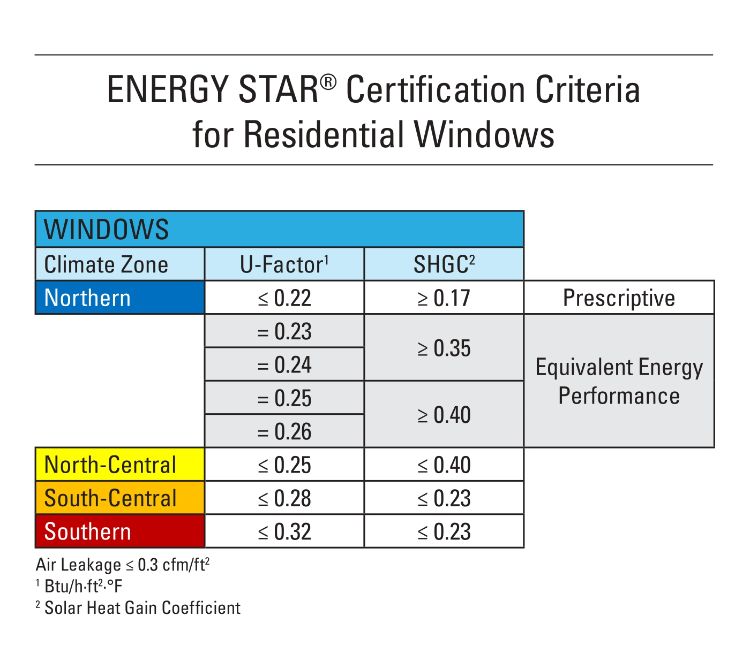
Image Source: ENERGY STAR®
Key performance factors include:
Other factors like frame material, glass coating, and the number of panes also play a role. For a more interactive view of how these elements affect performance in your region, check out the Efficient Windows Collaborative's selection tool.



Even the most efficient window style needs high-performance glass to deliver energy savings. That’s where Low-E (low emissivity) coatings make a huge difference.
Low-E glass has a microscopically thin metal layer that reflects heat and blocks UV rays, without darkening your view. It’s ideal for:
Combined with Argon gas fill between panes, Low-E coatings significantly boost your window’s insulation.
Some homeowners can achieve energy savings of up to 40% simply by switching to Low-E glass.
If your goal is to hold onto heat during cold months, here’s how different windows compare:
| Window Style | Typical U-Factor Range |
| Fixed | 0.17–0.25 |
| Casement | 0.20–0.30 |
| Awning | 0.25–0.35 |
| Double-Hung | 0.30–0.50 |
| Sliding | 0.35–0.55 |
The lower the U-Factor, the better your window keeps heat inside. Fixed and casement styles clearly outperform traditional sliding or double-hung options.

To help you compare window products confidently, the National Fenestration Rating Council (NFRC) offers standardized, third-party energy performance ratings for windows, doors, and skylights. Their certification label rates products based on:
Look for the NFRC label when shopping to make sure you're getting verified energy-efficient performance.

For the ultimate in energy efficiency, triple-pane windows with fiberglass frames and Low-E coatings offer outstanding insulation, durability, and protection from heat transfer. They're especially effective in climates with extreme heat or cold.
When selecting windows for your home, both the style and type of glass play a critical role in energy efficiency.
Fixed and casement windows offer the best performance thanks to their airtight design, while styles like double-hung or sliding may be better suited for milder climates but typically offer less insulation.
To reduce heat loss and cut energy costs, look for:
With the right combination, you’ll get year-round comfort, protection from fading, and noticeable savings on your utility bills.
Q: What style of window is most energy-efficient?
A: Fixed and casement windows generally offer the best energy performance due to their tight seals and lower air leakage.
Q: What is the best type of window to keep heat out?
A: Windows with Low-E coatings and a low SHGC rating block solar heat effectively. Fixed or casement styles with these features are ideal.
Q: What windows have the best R-value?
A: Triple-pane windows with insulated frames (like fiberglass or composite) provide the highest R-values, indicating strong resistance to heat flow.
Q: Are triple-pane or quad-pane windows worth it?
A: In extreme climates, yes. They offer superior insulation and noise reduction.
Q: Can Low-E windows really lower my energy bills?
A: Absolutely—especially when combined with argon gas and proper installation. Many homeowners see noticeable drops in monthly costs.
Q: What frame material is most efficient?
A: Vinyl, fiberglass, and composite frames typically insulate better than aluminum.
Q: How do I know if my windows need replacing?
A: Drafts, condensation, difficulty opening/closing, and rising energy bills are all signs.
At Conservation Construction, we specialize in Low-E replacement windows designed to handle the extreme swings in Colorado weather. Our windows feature:
Lifetime warranties back all windows, and many customers see up to 40% off their energy bills after upgrading.
We’re a family-owned window company with over 30 years of experience helping local homeowners. Since 2011, we’ve held an A+ rating with the BBB by focusing on quality, service, and lasting performance.
Let’s make your home more comfortable, efficient, and protected all year.
Mixing window styles in a home can add character and visual appeal, but many homeowners worry that combining different designs might look mismatched. While uniform windows create a cohesive appearance, carefully chosen variations can highlight architectural features and improve functionality. The key is finding a balance with the home’s structure and style. Factors like frame materials, trim colors, and window placement create a seamless look and say yes to "Can you mix window styles in a home." Professionals use strategic design choices to blend styles without disrupting the home’s aesthetic. Whether the goal is maximizing natural light, improving airflow, or creating a focal point, the right combination of windows can elevate both form and function.
Yes, you can mix window styles in a home to enhance both aesthetics and functionality. By selecting complementary designs, maintaining consistency in frame materials, and considering architectural flow, homeowners can create a cohesive look that adds character and value.
Knowing what works—and what to avoid—helps homeowners confidently mix window styles to complement their space. Exploring expert tips and common mistakes can make all the difference when planning a home’s window design.

Choosing various window styles can add character and function to a home. Instead of sticking to a single design, many homeowners opt for a mix to highlight different architectural features and meet practical needs. A well-thought-out combination for your window replacement can transform the overall look while improving everyday comfort.
Striking the right balance between aesthetics and function creates a home that looks intentional rather than mismatched. The key is choosing styles that work together rather than compete for attention.
Selecting different window styles requires careful planning to maintain a balanced look. Without a clear strategy, mismatched designs can make a home feel uncoordinated. Paying attention to key design elements helps achieve a polished result.

Windows should complement the home’s overall architecture rather than compete with it. A contemporary house often pairs well with sleek, expansive glass, while traditional homes benefit from classic grid patterns or arched windows.
Even with varying window styles, using the same frame material, color, and trim creates a unified appearance. Mixing too many finishes or contrasting colors can make windows feel out of place.
Different rooms have different needs:
Focusing on these details helps create a seamless blend of styles that feels intentional and well-designed.
Pairing different window styles can improve both aesthetics and function. Some combinations naturally complement each other, offering a mix of ventilation, natural light, and visual appeal. Choosing the right pairings helps maintain a balanced look while meeting practical needs.

✔ Double-Hung + Picture Windows – A timeless choice allowing airflow while maximizing outdoor views. The fixed picture window acts as a centerpiece, while double-hung windows on either side provide ventilation.
✔ Casement + Bay or Bow Windows – Casement windows open outward for fresh air, making them a great match for bay or bow windows, which create depth and architectural interest.
✔ Awning + Large Fixed Windows – A perfect combination for modern homes. Fixed windows provide uninterrupted views, while awning windows above or below allow fresh air in without compromising style.
Mixing the right styles can elevate a home’s design and improve functionality. Selecting combinations that serve both form and purpose ensures a polished and cohesive result.
Blending different window styles can add character, but certain missteps can leave a home looking unbalanced or disjointed. Avoiding common mistakes ensures a visually appealing and functional result.

Mixing too many different window designs can create a chaotic look. Instead of achieving a curated aesthetic, the home may appear mismatched. Stick to a few complementary styles that work together rather than introducing too much variation.
Windows plays a major role in insulation and energy use. Choosing styles without considering efficiency can lead to heat loss in winter or excessive heat gain in summer. When combining different window types, factor in glazing, frame materials, and energy ratings to maintain comfort and lower utility costs.
A home’s design should guide window selection when deciding can you mix window styles in a home. Installing ultra-modern windows in a historic-style house or ornate windows in a minimalist home can feel out of place. Keeping window choices in sync with the home’s structure preserves its harmony.
By avoiding these pitfalls, homeowners can mix window styles that feel intentional and well-integrated.

Mixing different window styles can add interest to a home, but without the right approach, it may feel uncoordinated. Thoughtful planning helps create a seamless design that blends various styles without clashing.
Even with different window types, matching frame materials and colors prevents a disjointed appearance. Whether choosing vinyl, wood, or aluminum, uniformity in these elements helps tie everything together.
Windows don’t have to be identical, but maintaining some level of symmetry enhances curb appeal. Aligning window heights, shapes, or placements keeps the exterior looking polished rather than random.
When asking if you can mix window styles in a home, the answer depends on design choices. Professionals consider architectural flow, energy efficiency, and aesthetics to create a layout that works. If incorporating multiple styles, expert guidance can help prevent costly mistakes.
These strategies allow homeowners to mix window styles while maintaining a cohesive and intentional look.

The right combination of window styles can elevate a home’s appearance while improving natural light, ventilation, and efficiency. Thoughtfully blending different designs allows homeowners to highlight architectural features and create a customized look that suits their space.
Working with a professional helps ensure window choices complement each other rather than compete. From selecting the best pairings to maintaining consistency in materials and colors, expert guidance can make all the difference in achieving a seamless result.
If you’re considering new windows and wondering, can you mix window styles in a home, the answer is yes—with the right approach. Conservation Construction in Denver provides expert window installation services to help homeowners create a stunning, functional design. Contact our team today to explore the best window options for your home!
For professional guidance on choosing and installing the right windows, read our blog, Home Window Replacement Experts, and learn what sets experienced installers apart.
